1930s Vintage
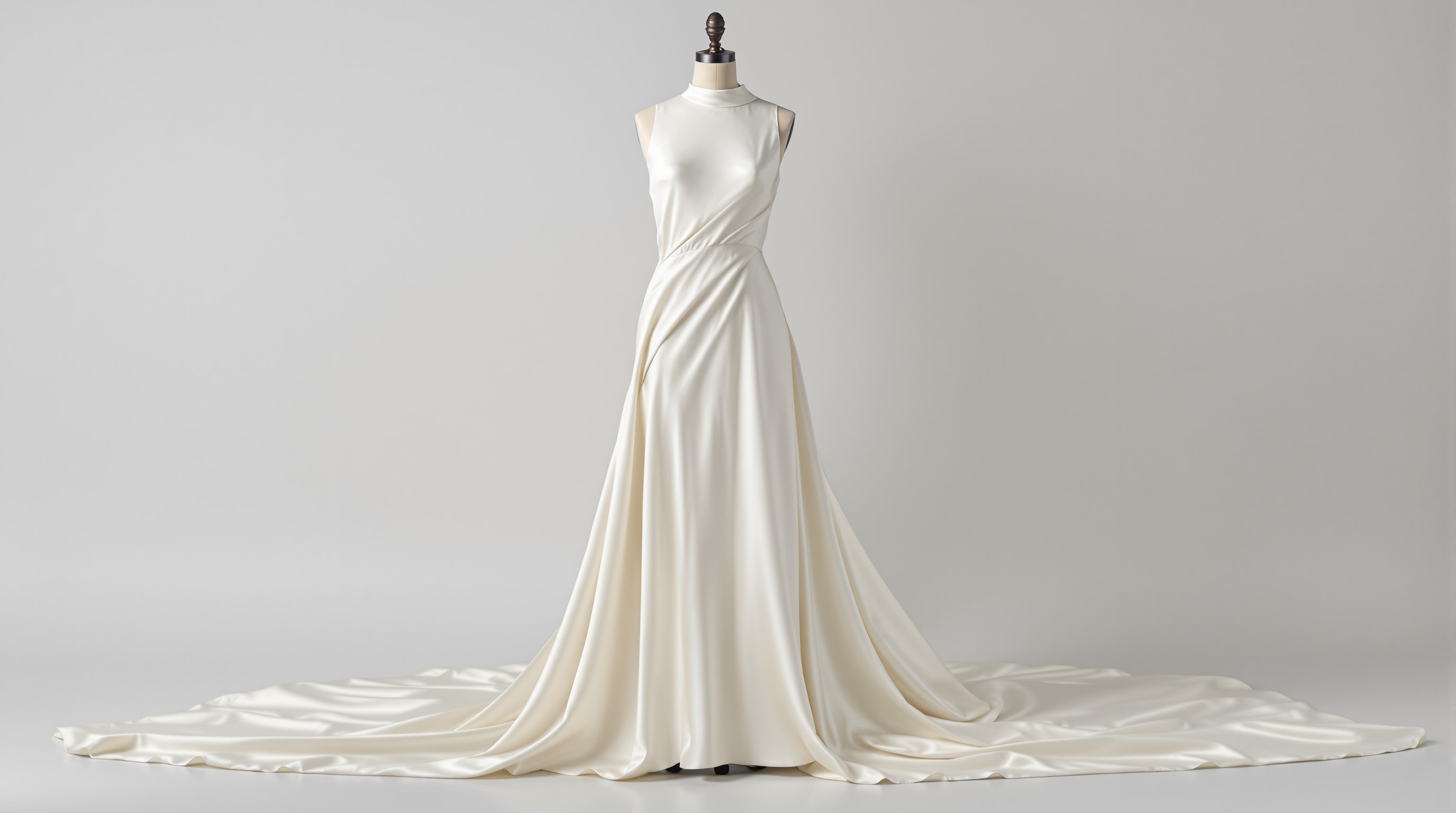
The 1930s are the most technically accomplished decade in the collection. The body returns after the flat 1920s, but it is achieved by cutting rather than by construction — cloth taken on the diagonal, moulded to the figure without a single dart or bone. It is the hardest thing in this collection to make and the easiest to recognise once you have handled one.
What the bias cut actually is
Woven cloth has almost no give along the warp or the weft, but a great deal along the 45-degree diagonal between them. Cutting on that diagonal produces fabric that stretches and recovers, follows the body's curves and falls in long fluid folds. It is also expensive and difficult: it consumes far more cloth, it must be cut with absolute precision, and a finished bias garment has to be hung for days before hemming because it goes on dropping unevenly under its own weight.
The practical tells are consistent. A true bias gown is heavy for its size. It hangs in an unbroken line with no horizontal break at the waist. Its side seams spiral very slightly around the body rather than running straight. And laid flat it looks unremarkable — shapeless, even — because it only resolves on a body.
Fabric
Silk satin and silk crepe dominate, backed by the newly available rayon, which drapes well and cost a fraction as much. Rayon is one of the decade's defining materials and its presence sets an earliest date: it is in general dress use from the 1920s and everywhere by the 1930s. It is also markedly weaker wet than dry, which is why so much 1930s rayon shows water-marking and distortion. See textiles for how to tell it from silk by hand.
Detail and decoration
Decoration is restrained because the cut is doing the work. What there is tends to be architectural: cowl necks, bias-cut ruffles, shoulder capes and applied bows, contrast piping, self-fabric trim, and the occasional passage of beading confined to a single shoulder or hip. Backs are important — evening dress of this decade is frequently cut to the waist at the back and completely covered at the front. Puffed or ruffled shoulder treatments appear from the mid-decade and are a good marker.
Bridal
Bridal is at its most elegant here and at its least fussy. The characteristic gown is a long bias column in silk satin, with a natural waist, a small covered-button placket, long fitted sleeves or a cape sleeve, and a train that flows from the hem rather than being applied. Trains are long. Decoration is minimal. It is the decade's clearest statement that cutting is enough. The bridal reference places it in sequence.
Condition and alteration
Bias garments have a specific vulnerability: because the fabric is under diagonal tension in wear, stress concentrates at the underarm and at the hip, and splits appear there first. Weighted silk satin from this period shatters in the usual way. And a bias garment is the hardest thing in the collection to alter — the cut cannot be changed without destroying the drape, seams cannot be moved without breaking the diagonal, and a hem must be re-hung and re-marked over days rather than simply taken up. Buy a bias dress that fits, or leave it. Assessing a vintage wedding dress covers the limits.
Dating notes
- Natural waist, no waist seam interruption, long unbroken vertical line.
- Side seams that spiral slightly.
- Metal zips begin to appear, usually at the left side seam.
- Rayon present; polyester absent.
- Small chain or coin weights in the hem of a good garment.
The Victoria and Albert Museum and the Kyoto Costume Institute hold well-documented bias-cut examples worth comparing against.
Nothing described here is for sale, in stock, or available to order.