Assessing a Vintage Wedding Dress
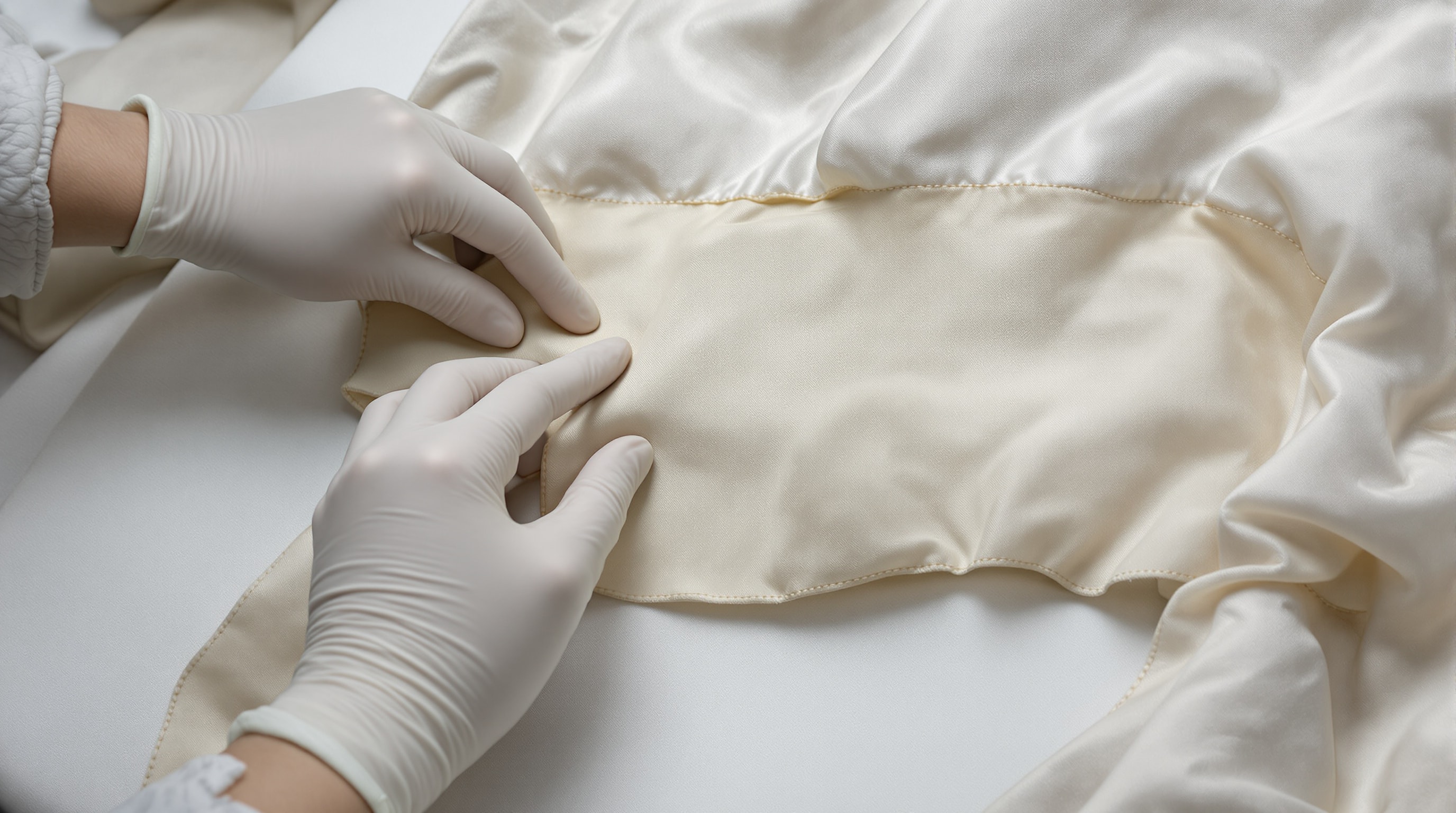
The decade-by-decade reference deals with what a gown is. This page deals with the harder question: whether a particular gown is sound, and how far it can be changed without destroying it. Almost every disappointment with vintage bridalwear comes from misjudging one of those two things.
Condition: what matters and what does not
Age alone is not a condition problem. A hundred-year-old cotton lawn gown that was washed, dried flat and stored in a drawer can be in better order than a forty-year-old polyester one that hung in a plastic cover. What matters is the specific failure mode, and they are not equally repairable.
Problems that are usually manageable: loose or missing beads where the ground fabric is intact; open seams; a detached hem; missing buttons; light overall greying; a torn lining. These are labour, not loss.
Problems that are usually terminal:
- Shattering silk. Silk that was weighted with metallic salts — a common finishing practice from the late nineteenth century until the 1930s — degrades from within and splits along the grain into narrow vertical cracks. It cannot be repaired, it cannot be stabilised for wear, and it worsens under any handling. It is most often seen in silk taffeta and in the linings of otherwise sound gowns.
- Underarm damage. Perspiration is acidic and its salts stay in the fibre long after the stain has faded. Underarm areas frequently look yellowed and feel papery, and the fabric there will tear under ordinary movement even when the rest of the gown is strong.
- Beadwork cutting its ground. Heavy glass beading on chiffon or net, especially where the garment has been stored on a hanger, saws through the ground fabric under its own weight. Look for beads that have migrated or for fine slits radiating from a bead line.
- Iron-mould and heavy brown foxing. Small rust-coloured spots, often from metal fastenings or from storage against paper or wood, are chemical damage to the fibre rather than surface soiling.
- Perished elastic and crumbling foam. A late-period problem. Elastic from the 1960s onward frequently fails entirely, and any foam padding of that era will have gone to dust or to a sticky orange residue.
Test a suspect area by supporting the fabric on the flat of your hand and pressing very gently with a fingertip. Sound cloth resists. Degraded cloth gives, and you will feel it start to part before you see it. Do not pull.
Alteration: what a period gown will and will not give
The central constraint is that vintage garments were generally cut with small seam allowances. Modern manufacture leaves room to let out; period manufacture frequently does not, because cloth cost money and the garment was made for one person. Before assuming a dress can be enlarged, turn it inside out and look.
- Letting out is limited to the allowance that exists, commonly half an inch or less per seam, and old seam lines usually remain visible as needle marks or as a permanent crease even after pressing. On silk they may not come out at all.
- Taking in is far safer, and is the direction most successful alterations run.
- Shortening a full or bias skirt is not a simple hem. A bias skirt should be hung for several days before it is marked, because it will drop unevenly, and a hem taken up on a beaded or bordered skirt destroys the border.
- Boned foundations in 1950s bodices can generally be adjusted, but the boning channels dictate where the seams can move.
- Sleeves and shoulders are the hardest area on any period garment. The armhole of a 1930s or 1940s gown is cut higher and further forward than a modern one, which is why an otherwise well-fitting dress can be impossible to lift your arms in.
The realistic rule is that a vintage gown can usually be made smaller, occasionally made slightly larger, and rarely made a different shape. Choose for the shoulders, the bust and the armhole, because those are what cannot be changed; the waist and length are the negotiable parts.
Fit and measurement
A vintage size label is not comparable to a modern one and should be disregarded entirely. Sizing conventions shifted repeatedly across the period and, for much of it, garments were made to individual measurement in any case. Work from the garment's actual measurements against your own — the measurement guide sets out how to take them and how much ease to allow.
Cleaning
Do not have a period gown cleaned as a default step, and be cautious of any process applied without identifying the fibre first. Solvent cleaning can dissolve early plastics and some adhesives, dislodge unstable dyes and damage certain beads and sequins — sequins made from gelatin or from early cellulose plastics will melt or cloud. Weighted silk should not be wet-cleaned at all. If a gown is to be cleaned, it is worth finding someone who works on historic textiles specifically; the American Institute for Conservation maintains a directory of conservators, and the Library of Congress publishes free technical notes on textile treatment.
Storage between purchase and wearing matters more than most people expect, and is covered under care and storage.
Nothing described here is for sale, in stock, or available to order, and no appraisal or authentication service is offered.