1950s Vintage
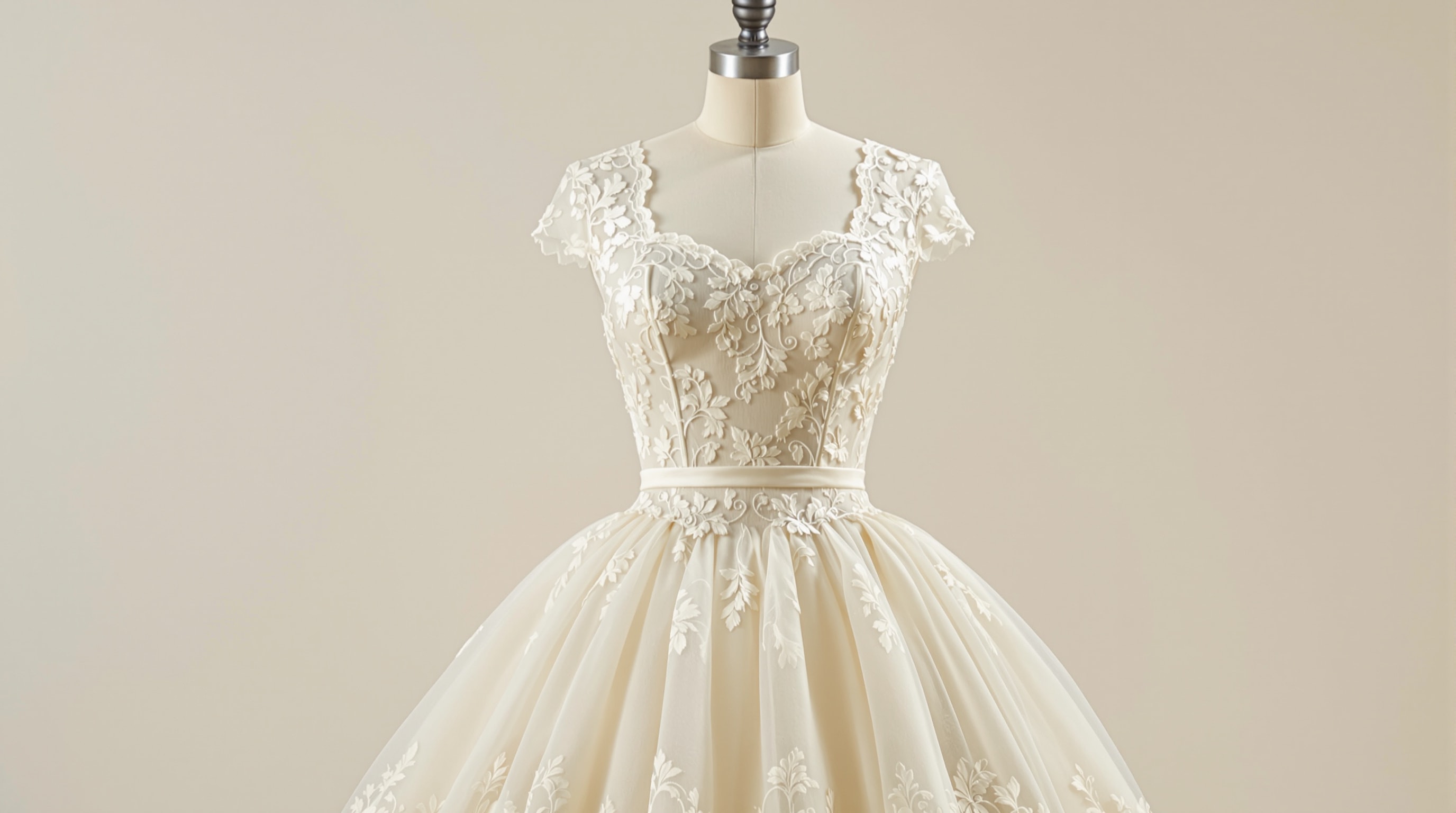
The 1950s are the deepest part of this collection and the decade most people picture when they picture vintage at all. They are also the decade in which interior construction reaches its most elaborate: a dress of this period frequently contains a complete second garment inside it, and understanding that is the key to understanding everything else about how it behaves.
Two silhouettes, not one
The decade runs on a pair of opposed shapes and both are correct. The first is the full skirt — a tightly fitted bodice over an enormous circle or gathered skirt, supported by layered net petticoats, sometimes over an integral boned foundation. The second is the narrow sheath, a slim wiggle dress fitted straight through the hip, often with a back vent or a kick pleat because it is otherwise impossible to walk in.
Both share the same waist: small, defined and firmly at the natural line. If the waist is anywhere else, the garment is not of this decade.
Tea length
The tea-length dress finishes between the knee and the ankle, most often at mid-calf, and it is the ordinary formal length of the decade rather than a compromise. It is very heavily represented in this collection because it was the practical choice for a great many weddings, receptions and parties. A full-skirted tea-length dress in lace over tulle or in silk taffeta is the archetypal surviving 1950s formal garment.
Inside the bodice
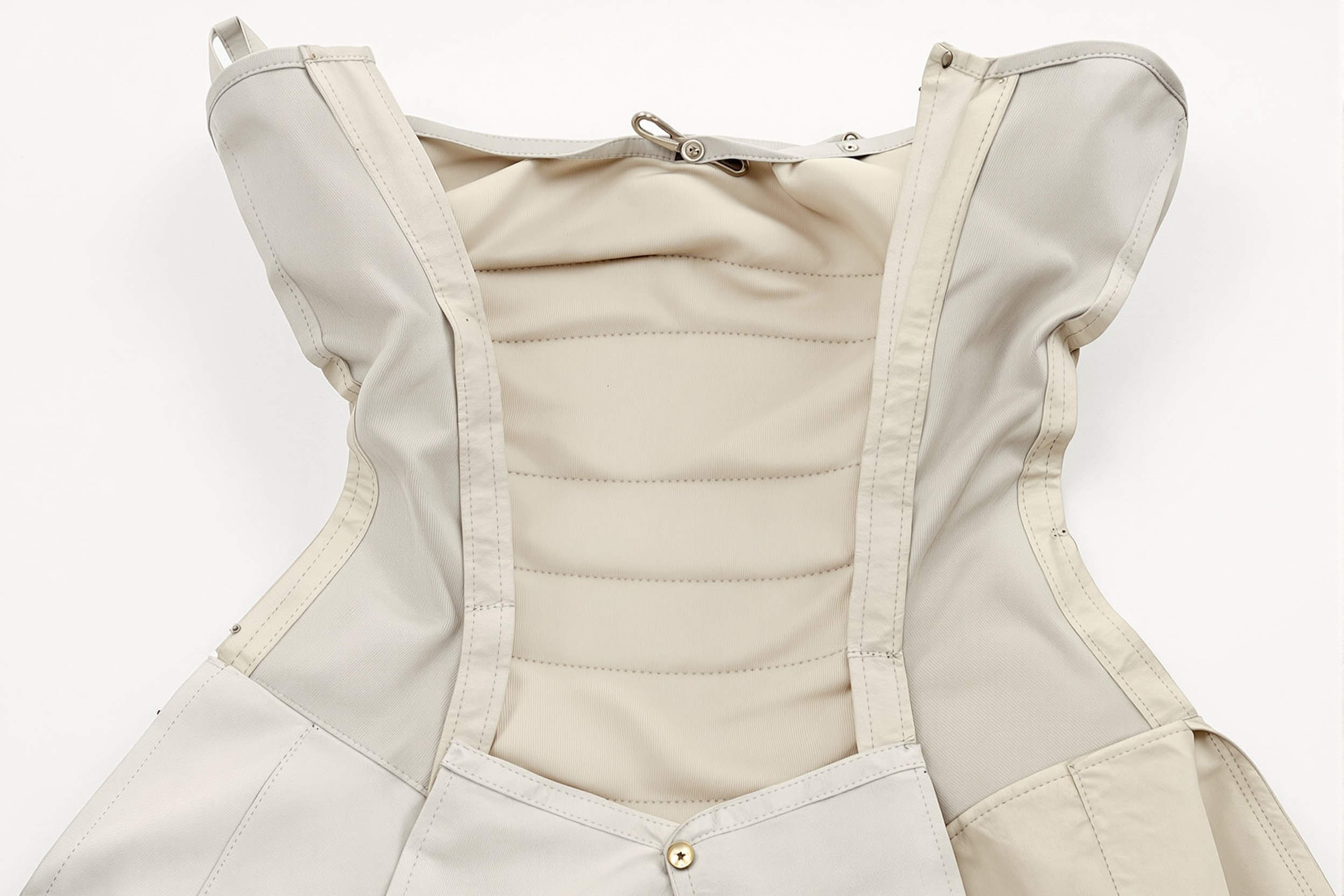
This is where the decade's technical interest lies. A well-made 1950s bodice typically contains:
- A separate boned inner bodice, with plastic or metal boning in stitched casings along the seams.
- A grosgrain waist stay with a hook, taking the weight of the skirt off the shoulders.
- Sometimes integral bust cups or shaping, particularly in strapless work.
- A metal zip, usually at the centre back or left side; nylon coil zips indicate the very end of the decade or later.
The strapless bodice becomes fully viable in this decade precisely because of this interior engineering, and the strapless dress with a matching detachable jacket or bolero is one of the era's most characteristic combinations.
Fabric
Silk taffeta with a pronounced rustle, faille, peau de soie, cotton sateen, embroidered organdy, and above all machine lace over tulle. Novelty prints are large in scale and confident — abstracts, oversized florals, border prints designed to sit at the hem. Nylon net petticoats belong here and yellow badly with age. Textiles covers identification.
Bridal
Bridal splits the same two ways: the formal full-skirted gown with a boned bodice, a sweetheart or portrait neckline and a chapel train, or the tea-length dress that a great many people actually married in. Lace over tulle dominates, sleeves are often short or three-quarter, and a matching jacket is common. This is the decade's largest presence in the bridal reference, and it is the easiest era in the collection to find in wearable condition.
Condition and alteration
The characteristic problems are all interior. Boning works its way through its casing and out through the fabric. Elastic in the waist stay or in shirring has perished. Nylon net petticoats have yellowed and gone brittle. Metal zips corrode. Underarm damage is common because the fitted bodice sits close.
Alteration is more feasible here than in most decades — the boned foundation can generally be adjusted, and there is often slightly more seam allowance than in earlier work — but the boning channels dictate where seams can move, and a bordered or heavily lace-trimmed skirt cannot be shortened without losing the border. See assessing a vintage wedding dress and measuring for a vintage dress.
Dating notes
- Small waist at the natural line, either very full or very narrow below it.
- Interior boned foundation and a grosgrain waist stay.
- Metal zip; nylon coil only at the very end.
- Large-scale prints; nylon net.
- Detachable jacket or bolero matching a strapless bodice.
The Kyoto Costume Institute and The Museum at FIT both hold extensive 1950s holdings with interior construction documented.
Nothing described here is for sale, in stock, or available to order.