1990s Vintage
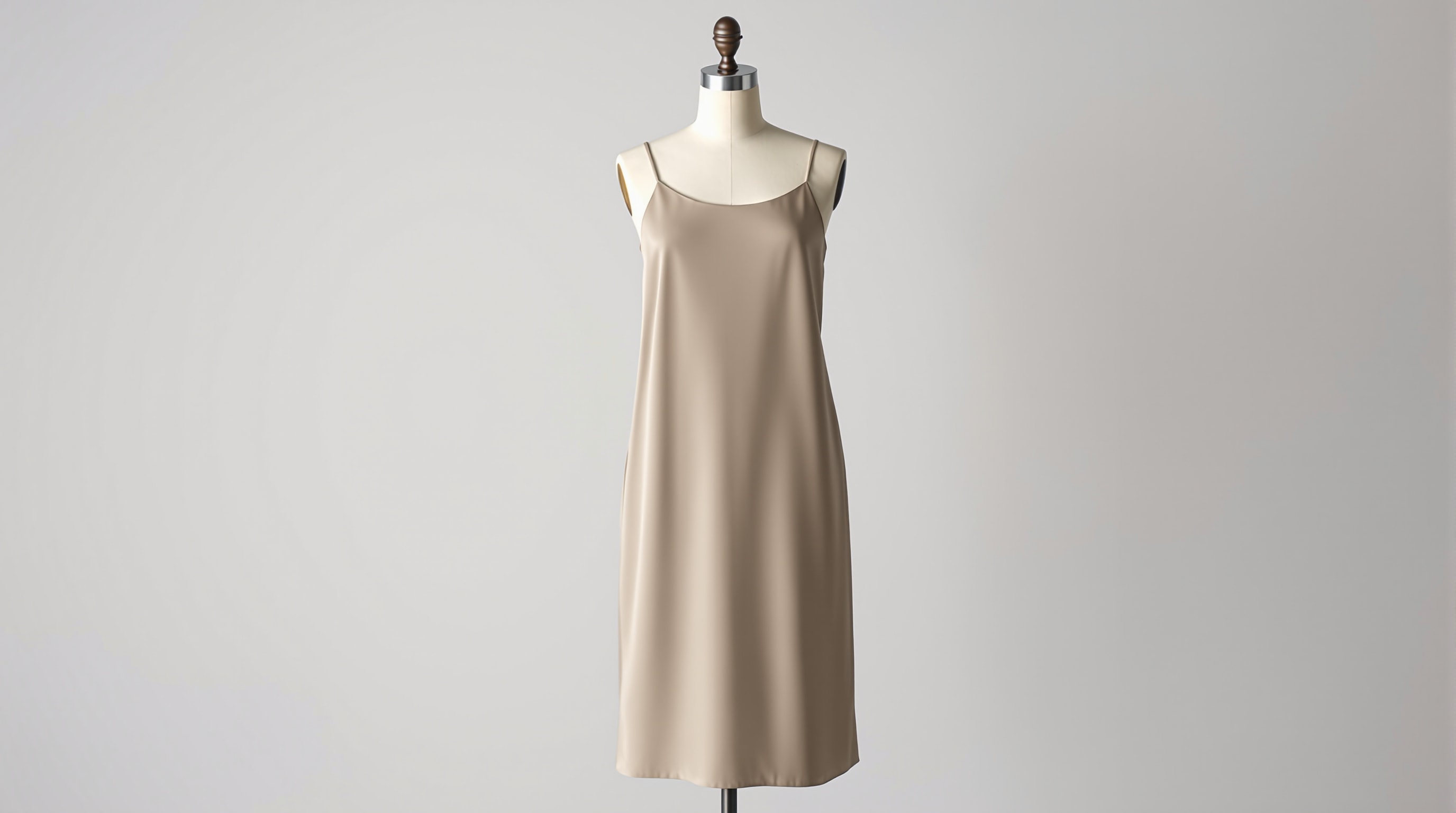
The 1990s are a reaction, and they read as one. Everything the previous decade had enlarged is stripped back: the shoulder drops, the decoration goes, the skirt narrows, and the shine is replaced by matte. It is the last decade this collection covers, and it is the point at which the garments start to look recognisably modern.
The line
The dominant shape is a narrow, unbroken column with a natural or slightly dropped waist and minimal seaming. The slip dress — a bias-cut or straight-cut sheath hung from narrow straps, deliberately resembling underwear — is the decade's defining garment and its most direct rejection of everything structural.
Shoulder pads shrink and then disappear entirely. Sleeves are plain and set close. Necklines simplify to a straight bateau, a plain scoop or a narrow V. Where the 1980s added, the 1990s subtract.
Fabric
Matte is the point. Crepe, matte jersey, silk georgette, heavy matte satin used face-down, and a great deal of plain fine wool in tailoring. Where lace appears it is used flat and unlined rather than layered over net. The palette narrows drastically — ivory, oyster, taupe, grey, black, navy — with the strong colour of the previous decade almost entirely absent.
Fibre is not a useful dating tool here, since everything is available by this point; construction and silhouette carry the work. See textiles.
Bridal
Bridal reduces to its simplest state anywhere in the collection: a plain matte column or a slim A-line, in silk crepe or matte satin, with a bateau or scoop neck, no sleeves or the narrowest possible ones, and either no decoration or a single restrained detail. Trains shorten. Veils simplify or are replaced entirely.
The interior structure that had defined the 1950s and 1980s is largely gone — a 1990s bridal bodice often has nothing inside it at all beyond a lining. That makes these garments considerably lighter and much less forgiving of fit, since there is no foundation doing any of the work. The bridal reference closes here.
Condition
These are the youngest garments in the collection and generally the soundest. The problems that do appear are specific: matte satin and silk crepe water-mark very easily and permanently, so a single spill or a steam mark is often unfixable; bias-cut slip dresses stretch and distort if stored on a hanger; and fine jersey snags and runs. Underarm damage remains common in unlined silk.
Because they look modern, 1990s garments are frequently laundered as though they were modern, which is where most of the loss occurs. Store flat where the cut is bias — see care and storage.
Dating notes
- Narrow, unbroken column; minimal seaming and minimal decoration.
- Matte fabrics, restrained neutral palette.
- Little or no shoulder padding; no interior boned foundation.
- Slip-dress construction with narrow straps.
- Machine overlocked seams and fused rather than stitched interfacing.
The Museum at FIT and the Victoria and Albert Museum both document dress of this period.
Nothing described here is for sale, in stock, or available to order.